Playing Alone in the Dark: What Happens When Online Slots Replace Human Connection

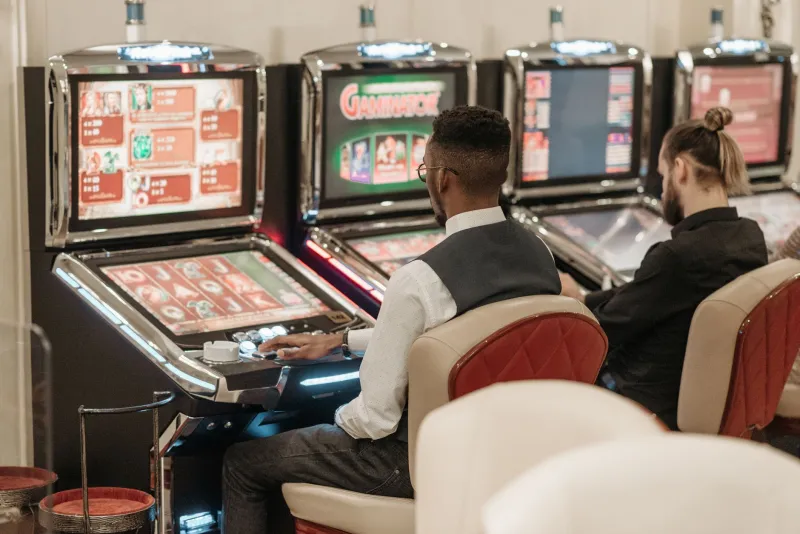
Picture a casino floor on a Friday night. It's loud, bright, and crowded. Someone at the slots next to you just hit a minor jackpot and half the row is looking over. A cocktail server is circling. Your friend is two machines down, periodically checking in. You've been there two hours and you're thinking about dinner.
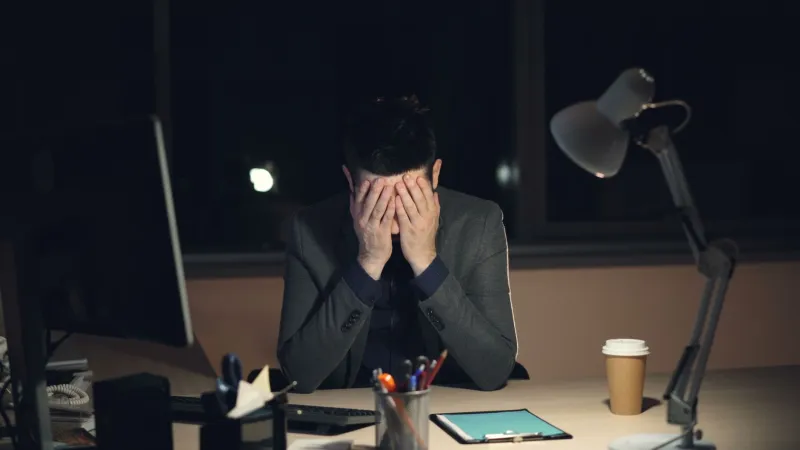
Now picture the alternative: your couch, 1 a.m., the house quiet, your phone in your hand, your partner asleep upstairs. Nobody knows you're playing. Nobody's watching the clock. The only thing between you and another spin is whether you choose to stop.
This is the essential difference between casino-floor gambling and online slots — and it's more significant than most players stop to consider.
The Disappearing Guardrails
Physical casinos are, unintentionally or not, full of friction. You have to get dressed and drive there. There are limited ATMs and cash-advance limits. Closing time exists. Other people are present, which creates social awareness — you're visible, your behavior is observable, and that visibility matters even when you don't think it does.
Online gambling strips most of that friction away. Platforms like Vulkan Slots are accessible 24 hours a day, 365 days a year, from any device with a browser. Deposits happen in seconds. There's no last call, no parking lot to walk through, no drive home to interrupt the session. The convenience is genuinely remarkable — and for the vast majority of players who engage recreationally, it's just that: convenient entertainment.
But convenience cuts both ways. The same features that make online slots easy to enjoy also make problematic patterns easier to sustain and harder to detect — both for the player and for everyone around them.
Invisible Play, Invisible Problems
One of the most consistent findings in gambling research is that problem gambling thrives in secrecy. On a casino floor, patterns become visible over time. A regular who's there every night, visibly stressed, betting more than usual — that's something floor staff can observe and, in well-run establishments, respond to. Friends and family who accompany someone notice when the session runs long or the mood shifts.
At home, alone, on a phone? None of that visibility exists. A player can spend three hours and several hundred dollars on a Tuesday afternoon without a single person knowing it happened. They can hide deposits, minimize browser windows, and compartmentalize the behavior in ways that simply aren't possible on a casino floor.
This invisibility doesn't cause problem gambling, but it removes some of the natural feedback loops that might otherwise prompt reflection or intervention earlier in the process.
The Void Gambling Fills — And Why That Matters
Here's the part that rarely gets talked about in conversations about online gambling: for a lot of Americans, the casino floor served a social function that had nothing to do with money. It was a place to go, something to do, a reason to be somewhere with other people. Slot machines provided entertainment, yes, but also a low-stakes reason to be out of the house.
The shift to online play has been dramatic — accelerated significantly by the pandemic years and the expansion of legal online gambling across more US states. Many players who made that shift discovered something unexpected: they played more at home than they ever had at a casino. The removal of travel friction, combined with 24/7 access, meant sessions that would have been limited by logistics were now unlimited.
For some players, that extra volume is fine. They have strong limits and treat it as entertainment. For others, the increased access coincided with — or perhaps enabled — using gambling to fill time, manage stress, or escape from loneliness or anxiety. And when gambling starts serving those emotional functions rather than purely recreational ones, the risk profile changes significantly.
Warning Signs That Solo Sessions Have Crossed a Line
Most people who play online slots regularly are doing so responsibly. But it's worth knowing the specific warning signs that solo, home-based play has shifted from recreation to something more concerning:
Playing to escape rather than to enjoy. There's a meaningful difference between spinning the reels because it's fun and spinning them because you're anxious, bored, or unhappy and want to stop feeling that way. If the motivation is relief rather than entertainment, that's worth paying attention to.
Increasing session length over time without noticing. If 30-minute sessions have quietly become two-hour sessions, and you're not sure when that happened, the time distortion effect of online play may be working on you.
Hiding or minimizing play from people close to you. This is one of the clearest behavioral signals. If you'd be embarrassed for your partner or family to see exactly what you spent and how long you played, ask yourself why.
Feeling irritable or restless when you can't play. Recreational activities are things you enjoy when you do them. When the absence of an activity starts causing discomfort, that's a different relationship entirely.
Playing to recover losses from previous sessions. This is loss-chasing, and it's as dangerous in a living room as it is on a casino floor — more so, because there's no one around to notice.
The Accountability Gap — And How to Fill It
The good news is that the accountability structures that exist naturally on a casino floor can be recreated intentionally in online play. It takes a bit of effort, but it's entirely doable.
Tell someone you trust that you play online slots and roughly what your budget is. You don't need to confess every session, but removing the secrecy changes the dynamic meaningfully. When someone else knows, you're no longer invisible to yourself.
Use platform tools. Vulkan Slots offers deposit limits, session time reminders, and self-exclusion options. These aren't just features for people with serious problems — they're useful for anyone who wants a structural guardrail against the convenience of 24/7 access.
Schedule your play rather than drifting into it. Deciding in advance that you'll play on Saturday afternoon for an hour, with $50, is fundamentally different from opening the app because you're bored at midnight and seeing where it goes.
And if you feel like the solo sessions have become something other than entertainment, there are resources specifically designed for this moment. The 1-800-GAMBLER helpline and the National Council on Problem Gambling (ncpgambling.org) offer confidential support with no obligation beyond a phone call.
A Final Thought
Online slots are genuinely entertaining. The technology is impressive, the games are varied, and the convenience of playing from home is real. Vulkan Slots, like any quality platform, is designed to give players a great experience.
But great experiences require honest self-awareness. The casino floor had built-in limits. The couch doesn't. That gap is your responsibility to manage — and knowing it exists is the first step toward managing it well.